NYC Tour AI Chatbot
Designing a Conversational Planning Experience
Overview
Tour operator websites are typically brochure-heavy and decision-light. Users are presented with long package descriptions and PDF itineraries, creating cognitive overload.
This project reframes the problem: instead of just improving filters, what if the interface behaved like a calm, experienced travel consultant? The resulted conversational experience helps users understand why a package fits them, reducing bounce rates and increasing inquiry conversion.
The Challenge
"I don’t know where to start, and I’m not confident I’m choosing the right option."
The Industry Gap
Travel planning is stuck between two extremes:
- OTAs optimize for search and comparison, assuming users already know what they want.
- Traditional Operators rely on static content, placing the cognitive burden on key users.
- Emerging AI Tools are often generic and destination-agnostic, lacking the contextual depth of a real operator.
Core Insight
People don’t struggle to find information. They struggle to interpret it and feel confident in their choice. The challenge is sense-making, not access.
Experience Strategy
The interface was reframed from information delivery to a guided conversation. The chatbot was not designed to "answer everything," but to guide, explain, and adjust.
Guide before selling
Users should understand the destination and experiences before being asked to choose a package. Education builds confidence.
Ask before recommending
Even minimal context (traveler type, duration) dramatically improves perceived relevance and trust.
Reduce cognitive load
Information is introduced progressively, avoiding long lists. Inspire confidence, not urgency.
Gen AI Strategy
Context-Grounded Generation
Generic LLMs often hallucinate. To act as a trusted tour operator, accuracy is non-negotiable.
I utilized Context-Grounded Generation to anchor the AI's responses in Enterprise Knowledge—the operator's specific tour catalog and brand guidelines. While the prototype uses static context, the architecture is designed for Retrieval-Augmented Generation (RAG) to scale with live inventory and pricing.
UX & Interaction Design
Live Interactive Design System
Fully interactive prototype.
Actual Tour Guide Instance
This is the fully functional version connected to the backend knowledge base.
(Requires Backend Server Running on
Port 4000)
Conversation Mechanics
The conversation flows like a human consultation: Warm introduction → Light qualification → Highlight explanation → Recommendation with reasoning.
Key Decisions
- Justification-First Instead of just listing packages, the bot explains why a recommendation fits the user's constraints (e.g., "Because you prefer a relaxed pace...").
- Quick-Reply Buttons Reduces typing effort and guides the user through the happy path while allowing free text when needed.
- Progressive Disclosure Detailed information (policies, logistics) is only shown when relevant, preventing overwhelm.
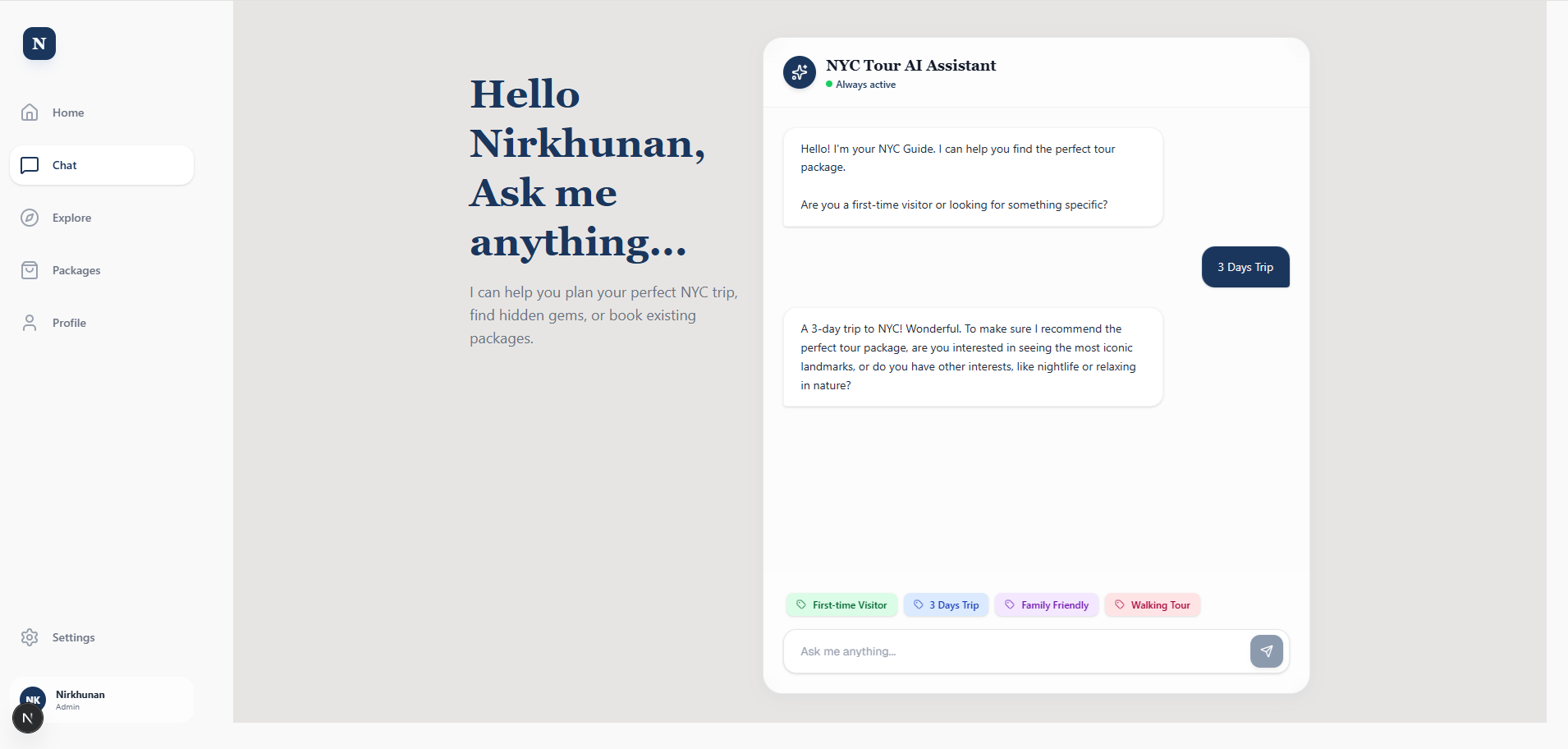
User is greeted with a welcoming interface and selects trip duration using quick-reply buttons
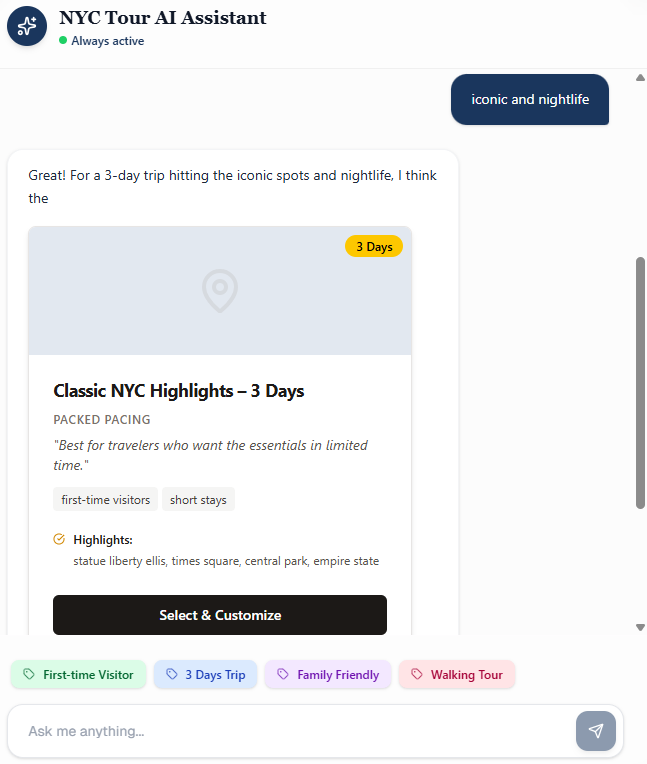
User expresses interest in iconic spots and nightlife
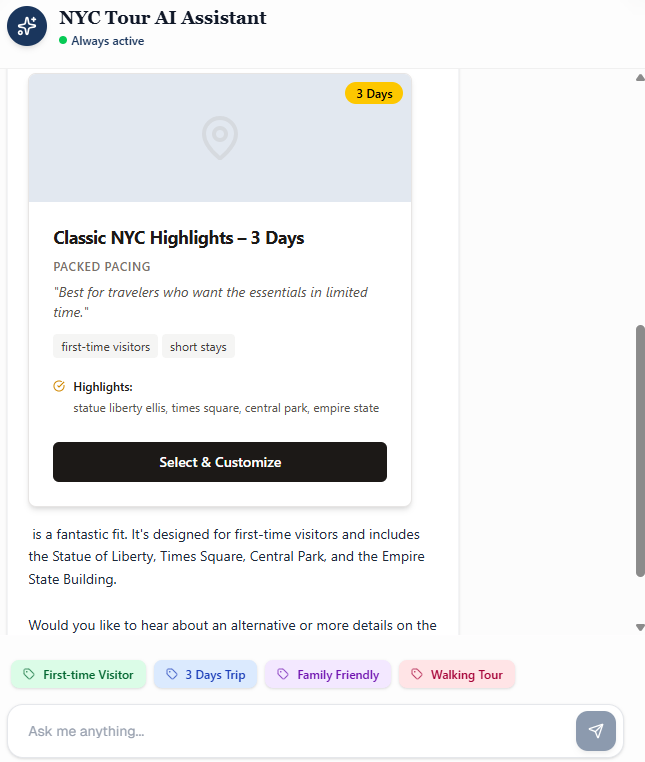
Bot explains why the package fits user's preferences
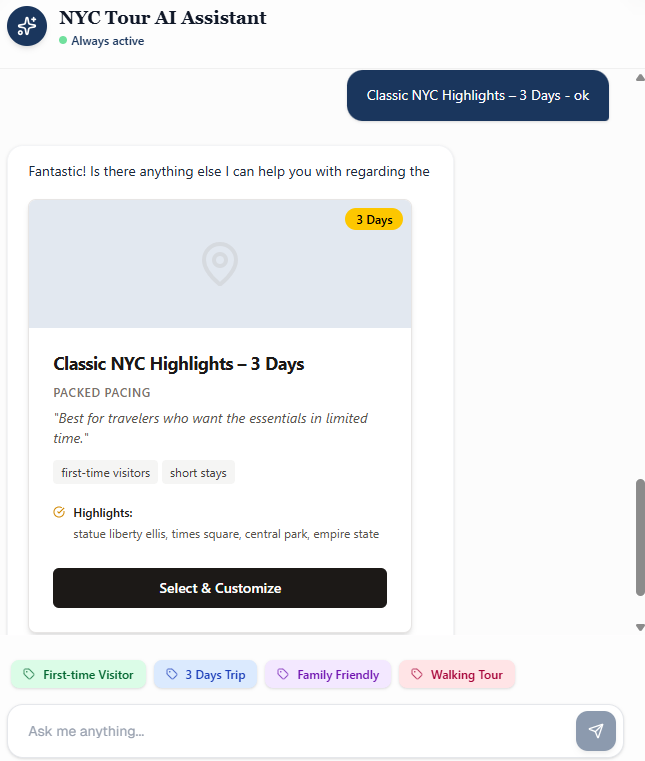
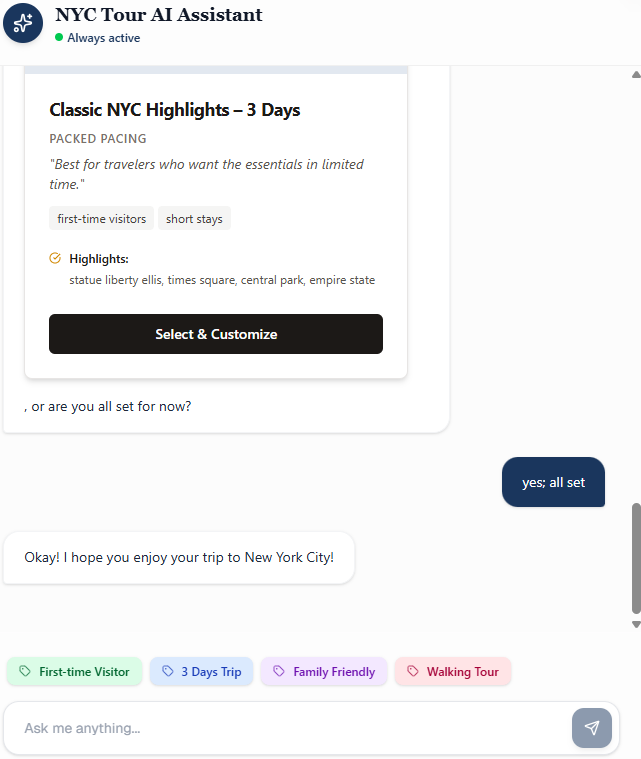
User confirms selection with quick-reply buttons
Friendly sign-off with clear next steps
Visual Language
The interface is designed to feel calm, friendly, and non-salesy. It looks more like a "guided conversation" than a standard chat app. Visual hierarchy inside the chat uses cards and bullets to improve readability.
Value & Outcomes
For Business
Reduced time to inquiry, higher qualified lead submissions, and fewer repetitive agent questions.
For Users
Reduced decision anxiety, improved clarity between similar offerings, and a scalable expert guidance without pressure.